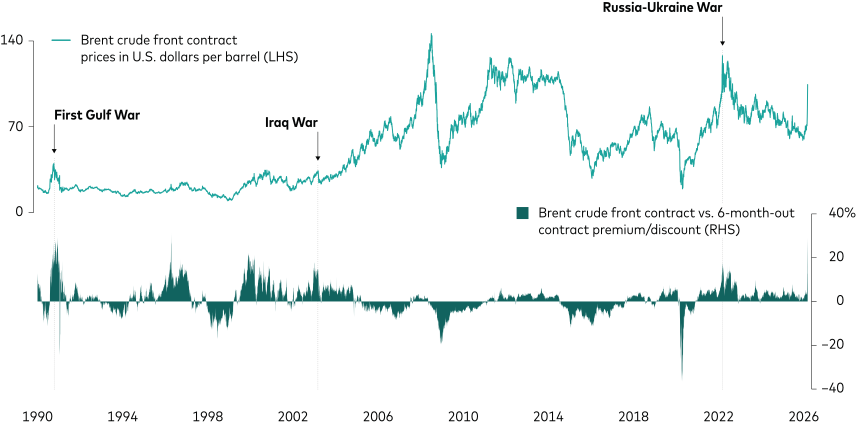
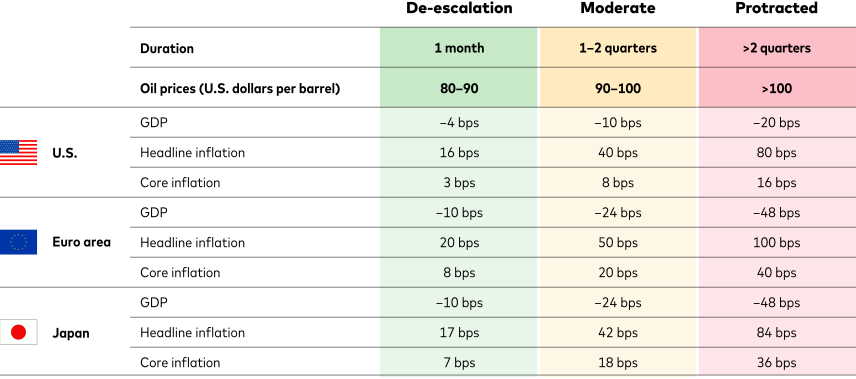
Notes: Bps stands for basis points. A basis point is one-hundredth of a percentage point.
Sources: Vanguard calculations, based on Oxford Economics and Federal Reserve data, as of March 9, 2026.
The U.S. economy is comparatively well-positioned to absorb an energy shock, especially one that is short‑lived. With household balance sheets, labor markets, and corporate fundamentals relatively strong, a de‑escalation of the conflict and a subsequent easing in oil prices could allow markets and economic activity to rebound. In that scenario, tighter financial conditions and weaker sentiment would likely unwind, limiting the risk of lasting damage and enabling a quicker snapback in growth and financial markets.
How the Federal Reserve is likely to respond
For now, continued conflict in the Middle East and high oil prices will likely tie central banks’ hands. Energy‑driven supply shocks are not something that monetary policy is designed to address, according to Josh Hirt, Vanguard senior U.S. economist. “Both sides of the Federal Reserve’s dual mandate fall under pressure,” Hirt said. “As long as it lasts, we would expect the Fed to have a bias toward inaction, although already elevated inflation will keep policymakers vigilant to potential changes in inflation expectations.”
Elevated oil prices would likely push out the timeline for rate cuts, Hirt said. Vanguard foresees just one Fed rate cut in 2026, a view that financial markets have adopted amid the conflict.
For the duration, Hirt said, investors will need to be prepared for what may lay ahead.
“Geopolitical uncertainty can pressure both stock and bond prices at the same time, even when the underlying economy is resilient,” he said. “Maintaining perspective and staying committed to a long‑term strategy is a way for investors to navigate volatility and participate in any eventual rebound.”
Notes:
All investing is subject to risk, including possible loss of the money you invest.
Funds that concentrate on a relatively narrow market sector face the risk of higher share-price volatility.
For more information about Vanguard funds, visit vanguard.com to obtain a prospectus or, if available, a summary prospectus. Investment objectives, risks, charges, expenses, and other important information are contained in the prospectus; read and consider it carefully before investing.